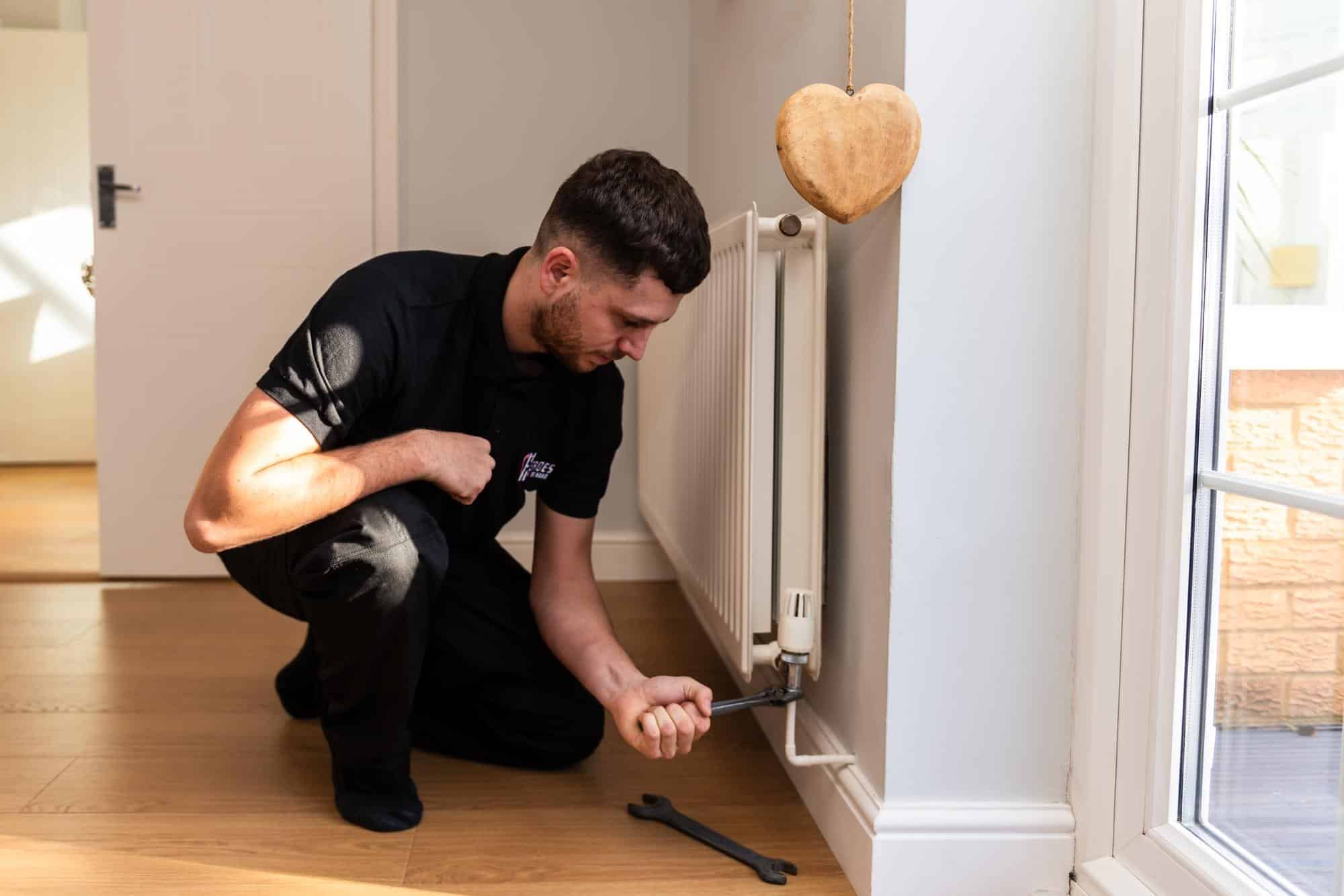
At Heroes on Hand we often get asked how to remove a radiator safely and with minimum mess. The secret is good preparation. With a little planning you can protect your home, avoid water damage and make the job smoother for whoever is carrying out the work. This guide walks you through the key steps we take as a professional team so you know what to expect and how to get ready.
Start with a clear reason. Maybe you are decorating, upgrading to a newer model, changing the room layout or investigating a fault. Your goal will shape the plan. If you are decorating you might remove the radiator temporarily. If you are upgrading you might also change valves, pipework routes or sizes. Knowing the purpose helps you plan materials, timescales and whether you need a like-for-like replacement.
Homes in the UK usually have sealed pressurised systems or open vented systems. Combination boilers and many modern setups are sealed and show a pressure gauge, often around 1 to 1.5 bar when cold. Older systems may have a feed and expansion tank in the loft. The preparation differs slightly between these types. If you are unsure, look for a pressure gauge near the boiler or an expansion vessel. Our engineers confirm the system type during a survey so we can isolate correctly and refill without introducing air or sludge.
Preparation saves time and prevents accidents. You will need absorbent towels, a shallow tray, a bucket, dust sheets and strong plastic sheeting for floors. Radiator valve caps or decorators caps are helpful if the radiator will stay off the wall for more than a day. Have PTFE tape and new olives ready if valves will be disturbed. Gloves and eye protection are a good idea. If the radiator is heavy, plan safe lifting with a second person and a clear route to where it will be stored.
Never rush this step. Hot water can scald and pressure rises when the system is hot. Switch the heating off and let the system cool completely. If you have a sealed system, note the current pressure on the gauge before starting. This gives you a reference when you refill.
Most radiators have two valves at the bottom. One is the control valve or TRV which you can turn by hand. The other is the lockshield which sets the balance for the system. Close the TRV by turning it fully clockwise. Close the lockshield carefully using an adjustable spanner. Count the exact number of turns to close so you can restore the same setting later when the radiator goes back on. This keeps your system balanced and avoids cold spots.
With both valves shut you can bleed the radiator to release any pressure inside. Place a towel and a tray under the bleed point. Use a radiator key to open the bleed screw slowly. Air or a small amount of water may come out. When the hissing stops, close the bleed screw again. For sealed systems this will slightly reduce the overall pressure which is expected.
Even a small radiator holds several litres of water. Loosen the union nut on the TRV side first while holding the valve body steady with a second spanner. Do this slowly and let water drain into your tray. Once the flow eases, tilt the radiator slightly towards the TRV side to guide more water out. Then loosen the lockshield side and repeat. Be patient and keep towels handy. If the water looks very dark, it may indicate sludge which is common in older systems.
Once the radiator is off, fit decorators caps or temporary caps to the valve ends if the radiator will remain off for a period. This reduces the chance of accidental opening and drips. If the valves are being replaced, make sure both pipes are safely sealed and stable. Avoid putting stress on exposed pipework while decorating or flooring work is carried out.
Radiators are heavy and can mark floors or walls. Stand the radiator upright on cardboard or a blanket in a dry area. Do not lean it on fresh plaster or painted surfaces. If you are reusing it, keep the bleed screw and blanking plug safe. If you are replacing it, check sizes and pipe centres so the new model lines up with existing pipework. Our team measures carefully at survey stage so installation is neat and avoids last minute changes.
When the radiator goes back on, new sealing washers or PTFE on threads may be needed. Reconnect the unions, open the valves to their previous positions and bleed the radiator until air is gone. On sealed systems top up the boiler pressure to the level you noted at the start while the system is cold. Once the heating is on, check for leaks at every joint. Balancing may be required to keep all rooms heating evenly. We handle this as part of our service so rooms warm up consistently.
If valves are seized, if you suspect a faulty TRV, or if you see signs of corrosion on pipework or radiator panels, it is safer to ask for help. Removing a radiator can seem straightforward, but issues like stuck unions, hidden microleaks and incorrect refilling can lead to bigger problems later. A professional will also advise on upgrades such as thermostatic valves, improved insulation on pipe runs and powerflushing if sludge is affecting performance.
Clear a path from the work area to the door. Move furniture and cover floors. Check pets and children are kept away from the space. Confirm where the drained water will be disposed of and where the radiator will be stored. Agree timings for removal and refit if decorators or other trades are involved. Good coordination keeps the project efficient and avoids delays.
If you are planning decorating or layout changes and want the work done neatly and safely, Heroes on Hand can help. We can advise on how to remove a radiator, carry out a survey, isolate the system correctly and refit with care. We focus on tidy workmanship, clear communication and reliable results so your home stays protected throughout the job.
To book assistance or learn more about our heating and plumbing support, contact us now!

Our expert engineers can help with all kinds of boiler repair and maintenance issues
Boiler Repair

If you need help with a plumbing, heating or gas issue then please contact us by calling 020 8419 8866 or you can book an engineer directly by selecting one of the options below.
Read more posts below:

As winter sets in, many of us may find ourselves travelling for holidays or commitments, leaving our homes at the mercy of the freezing cold.

If you're looking to remove a radiator from your home, it's important to understand the process and take the necessary precautions.

In London, where the safety standards are stringent and the demand for qualified professionals is high.
If you need help please contact us using the details below or fill out the form and we'll be straight in touch.