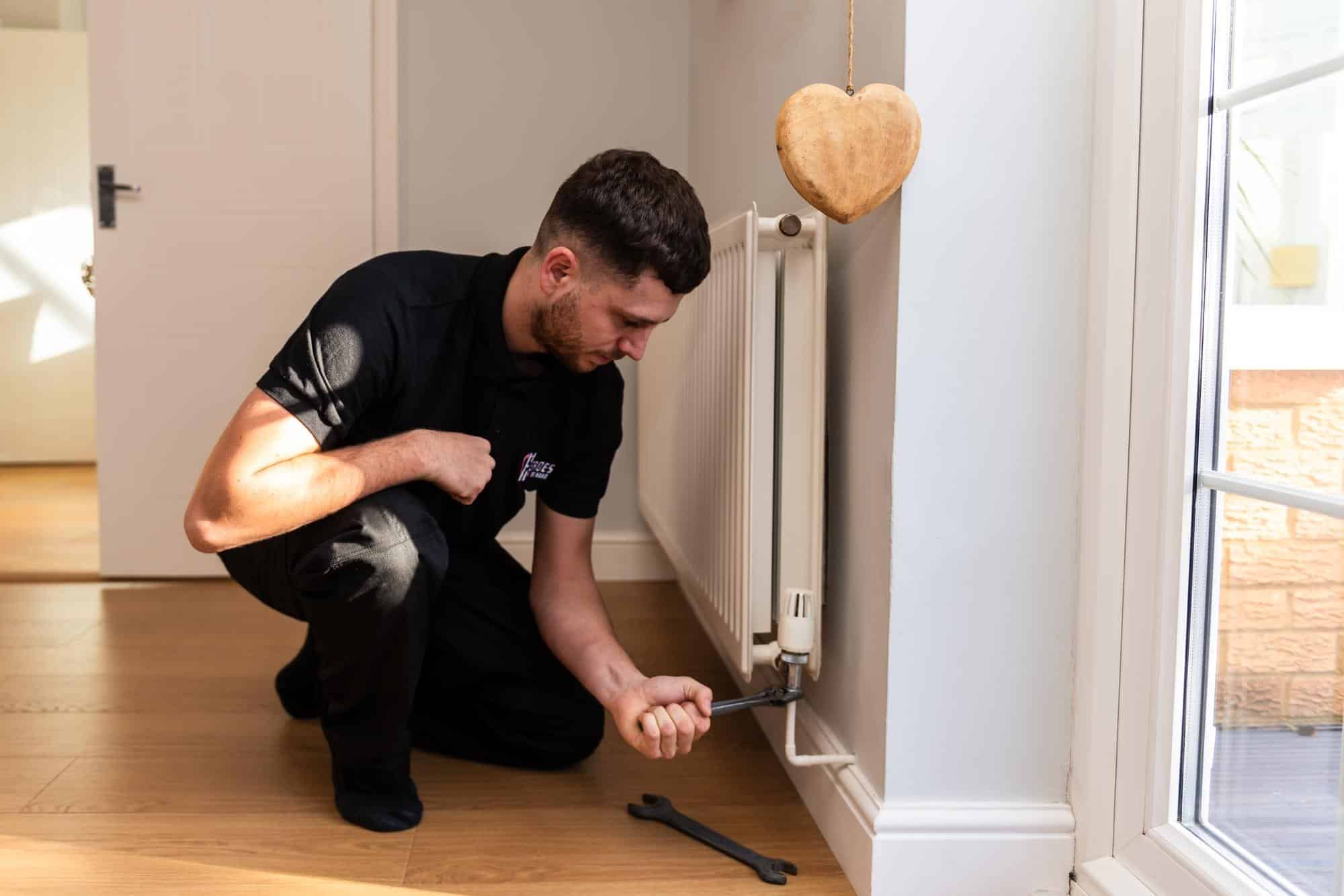
At Heroes on Hand we help homeowners and landlords keep heating systems reliable, efficient and quiet. One of the biggest threats to performance is sludge. Sludge is a mix of rust, scale and debris that settles in radiators and pipework. Left alone it can block flow, create cold spots, strain your boiler and push up energy bills. The good news is that regular care and smart choices can prevent most issues. Here is our practical guide to central heating cleaning and long term maintenance so your home stays warm and your system lasts longer.
You do not need specialist tools to spot early warnings. Radiators that are cold at the bottom and warm at the top often point to sludge. Taps or showers that lose temperature when heating is on can hint at restricted flow. Noisy pumps, kettling sounds at the boiler and frequent bleeding are other clues. If rooms take longer to heat or some never feel as warm as others, it may be time to plan central heating cleaning before small problems become expensive repairs.
Air pockets reduce efficiency and can speed up corrosion. Bleeding radiators at the start of the heating season helps keep water moving smoothly. After bleeding, check system pressure on sealed setups and top up to the level recommended for your boiler model when cold. If some rooms still heat more slowly, balancing the system by adjusting lockshield valves can restore even warmth. We do this as part of our service visits so every radiator gets its fair share of flow.
A quality magnetic filter can capture a large share of the metallic particles that would otherwise circulate and settle. Fitted on the return pipe near the boiler, it is easy to service and prevents fresh build up after a clean. During annual maintenance we remove the magnet, flush out the chamber and check seals. This simple step supports ongoing central heating cleaning and protects pumps, heat exchangers and valves from wear.
Water treatment is essential for long term protection. A good corrosion and scale inhibitor coats internal surfaces to slow rust and stops minerals forming hard deposits. After any drain down or flush we add the correct dose and label the system so future top ups are easy to manage. For open vented systems we place the dose through the feed and expansion tank. For sealed systems we use a dosing point or the magnetic filter body. Keeping inhibitor levels healthy is one of the best defences against sludge.
If your system has years of build up, a thorough clean can restore performance. We use calibrated pumps and chemicals designed to lift and move sludge safely. Each radiator is agitated to free stubborn deposits, then everything is rinsed until water runs clear. The process is planned to protect valves and seals and to avoid pushing debris where it should not go. Once complete we add fresh inhibitor and recommission the system. Many customers notice faster warm up times and quieter operation straight away.
If you are renewing a boiler or adding radiators, it pays to start clean. We flush new pipework, verify flow rates and set system pressure correctly. We also recommend a magnetic filter and inhibitor from the outset so the fresh metal in a new system does not rust quickly. Good commissioning forms the foundation for easy central heating cleaning and fewer breakdowns over the life of the system.
Small checks make a big difference. If you have a sealed system, glance at the pressure gauge every few weeks. Regular top ups can introduce oxygen which fuels corrosion, so contact us if the pressure drops often. A quick sample from a radiator can also reveal water condition. Dark fluid with visible particles points to active corrosion. We can test and advise whether a treatment boost or a deeper clean is the right next step.
Sticking radiator valves and tired pumps reduce circulation and allow sludge to settle. Turn thermostatic valves fully open and fully closed a couple of times at the start of the season to free the pin. Listen for humming or grinding from the pump housing. If a pump is weak, water will move slowly and deposits will collect. Timely replacement maintains good flow which is essential for keeping systems clean.
Heat lost along uninsulated runs makes boilers work harder. Insulating pipes in lofts, garages and voids keeps water hot and reduces cycling. Pair this with realistic room thermostat and hot water settings and your boiler spends less time heating water unnecessarily. The system will run at steadier temperatures, reducing stress on components and slowing corrosion.
A yearly service is the ideal moment to check filters, water treatment levels, safety devices and expansion vessels. We also review balancing, radiator performance and any signs of partial blockage. Finding an issue early is always cheaper than replacing damaged parts later. Our service reports set out clear steps so you know what to do now and what to budget for in the future.
If you notice persistent cold spots, frequent boiler lockouts, black water during a bleed or repeated pressure loss, the system likely needs more than a quick fix. Central heating cleaning carried out by a professional team will remove the root cause and help your system run smoothly again. We can combine cleaning with upgrades such as new thermostatic valves, smarter controls and improved insulation to lock in the gains.
Sludge is preventable with the right habits and support. By bleeding and balancing, fitting a magnetic filter, keeping inhibitor levels correct and booking a thorough clean when needed, you can protect your boiler, reduce bills and enjoy even heat in every room. If you want a tailored plan for your property, Heroes on Hand is here to help with clear advice and tidy workmanship.
To book central heating cleaning or to discuss a maintenance plan, contact us now!

Our expert engineers can help with all kinds of boiler repair and maintenance issues
Boiler Repair

If you need help with a plumbing, heating or gas issue then please contact us by calling 020 8419 8866 or you can book an engineer directly by selecting one of the options below.
Read more posts below:

When it comes to home heating, many homeowners feel overwhelmed by the complex workings of their boiler system.

When your heating system sputters in the dead of winter or a leak springs in your bathroom, knowing whether to call a plumber or a heating engineer?

There is an urgent need to lower the amount of CO2 being released into the atmosphere and to cut down rising energy bills costs. Reducing the amount of fossil fuels being burnt to heat our homes can go a long way in helping to achieve that and the introduction of hydrogen boilers could prove to...
If you need help please contact us using the details below or fill out the form and we'll be straight in touch.